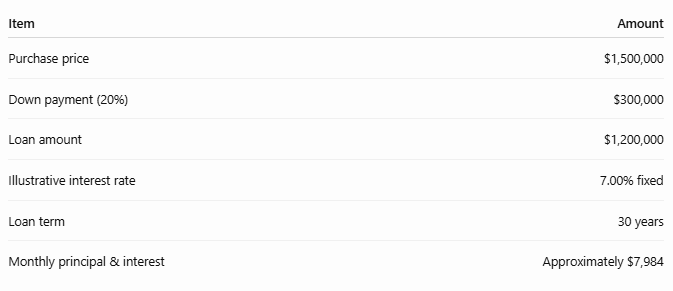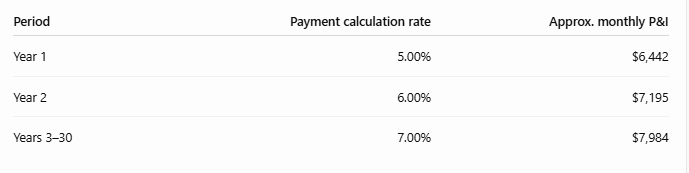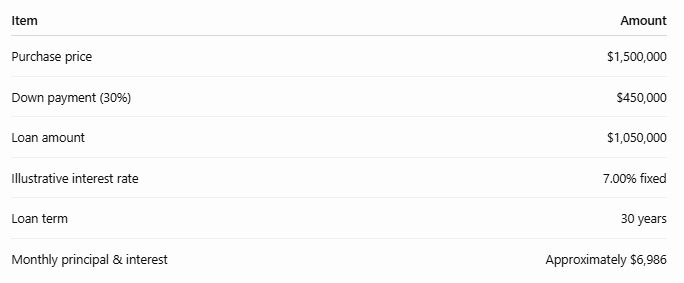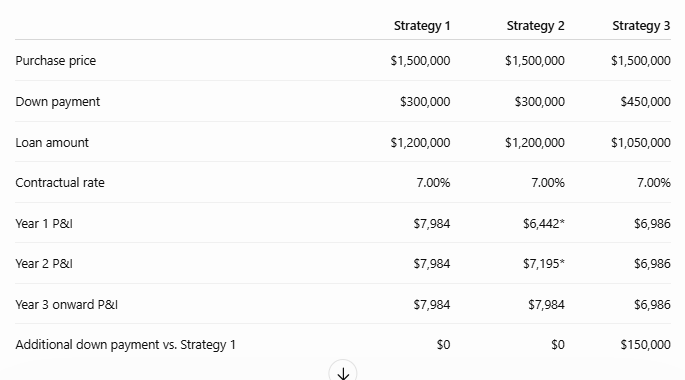
Learn how seller credits, mortgage buydowns, and price reductions can lower upfront costs and help homebuyers structure a smarter purchase.
Seller Credits & Buydowns: Why the Best Deal Isn't Always the Lowest Price
When buyers negotiate a home purchase, the conversation usually starts with one question:
"How much can we negotiate off the asking price?"
But price is only one part of the equation.
In today's market, buyers may have another valuable opportunity: negotiating the financial structure of the transaction.
According to Redfin, 46.2% of U.S. home sales analyzed in May 2026 included some form of seller concession, up from 43.1% a year earlier.
That's nearly 1 in 2 transactions analyzed.
Seller concessions can include assistance with closing costs, repairs, and mortgage-rate buydowns. For buyers, that creates an important strategic question:
Is it better to negotiate a lower purchase price—or use some of that negotiating leverage elsewhere?
The answer depends on your individual situation.
What Is a Seller Credit?
A seller credit—sometimes called a seller concession—is money the seller agrees to contribute toward certain buyer expenses at closing.
Depending on the loan program and transaction, those funds may be used toward eligible expenses such as:
- Closing costs
- Prepaid taxes and insurance
- Discount points
- Temporary interest-rate buydowns
- Other lender-approved settlement costs
A seller credit generally isn't cash handed directly to the buyer. It must be applied toward eligible costs and comply with the applicable loan guidelines.
The key is not simply negotiating a credit.
It's determining how to use that credit strategically.
Price Reduction vs. Seller Credit
Consider a simplified example.
Suppose you're purchasing a home and have enough negotiating leverage to ask the seller for $10,000.
You could potentially negotiate:
Option A: A $10,000 reduction in the purchase price.
Or:
Option B: A $10,000 seller credit toward eligible closing costs or financing expenses.
At first glance, reducing the purchase price may seem like the obvious choice.
But the immediate financial impact can be surprisingly different.
On a 30-year mortgage, reducing the purchase price by $10,000 may only reduce the monthly principal-and-interest payment by a relatively modest amount, depending on the down payment and interest rate.
Using $10,000 toward eligible closing costs, on the other hand, could potentially allow the buyer to preserve thousands of dollars in cash at closing.
Alternatively, some or all of that credit might be used to reduce the mortgage rate.
That's why buyers should evaluate both monthly payment and cash-to-close, rather than focusing exclusively on purchase price.
Permanent Rate Buydowns
One potential use of seller credits is purchasing mortgage discount points.
Discount points are upfront charges paid at closing in exchange for a lower mortgage interest rate.
Unlike a temporary buydown, a permanent buydown reduces the contractual interest rate for the life of the loan.
For buyers planning to keep the property and mortgage for an extended period, this can potentially create meaningful long-term savings.
However, paying points isn't automatically the best decision.
The important calculation is the break-even period:
How long will it take for the monthly savings to recover the upfront cost of buying down the rate?
If you sell or refinance before reaching that point, the financial benefit may be limited.
How Does a 2-1 Buydown Work?
A temporary buydown takes a different approach.
Instead of permanently changing the note rate, funds are set aside at closing to temporarily subsidize the borrower's payments.
With a typical 2-1 buydown:
- Year 1: Payments are generally calculated as though the rate were 2 percentage points below the note rate.
- Year 2: Payments are generally calculated as though the rate were 1 percentage point below the note rate.
- Year 3 onward: Payments return to the full note-rate amount.
For example, if the note rate were 6.5%, the payment schedule would generally be based on:
Year 1 → 4.5%
Year 2 → 5.5%
Year 3+ → 6.5%
The mortgage itself still carries the 6.5% note rate. The temporary buydown funds subsidize the difference during the introductory period.
Importantly, buyers generally must still qualify according to the applicable loan guidelines using the actual note rate rather than simply the temporarily reduced payment.
Why Would a Buyer Consider a Temporary Buydown?
The first few years after purchasing a home can involve significant expenses.
Buyers may be paying for:
- Moving
- Furniture
- Renovations
- Repairs
- Landscaping
- New appliances
- Other costs associated with settling into the property
A temporary buydown can potentially provide additional cash-flow flexibility during that transition.
But buyers should be comfortable with the full payment that eventually takes effect.
A temporary buydown should be viewed as a financial strategy—not as a way to make an otherwise unaffordable property appear affordable.
Could a Seller Credit Be Better Than a Price Reduction?
In some situations, yes.
Imagine negotiating $20,000 from a seller.
A buyer might instinctively request:
$20,000 off the purchase price.
But another strategy could potentially involve:
- Part of the concession toward closing costs
- Part toward discount points
- A temporary buydown
- A combination of eligible uses
Depending on the financing and the buyer's objectives, this could create a greater immediate benefit than applying the entire $20,000 toward price.
However, there are circumstances where the lower purchase price may still be preferable—particularly when long-term equity, appraisal considerations, cash availability, or future resale strategy are priorities.
There is no universal answer.
The numbers should be compared before the offer is structured.
How Much Can a Seller Contribute?
Seller concessions aren't unlimited.
The maximum permitted contribution depends on several factors, including:
- Loan program
- Occupancy
- Loan-to-value ratio (LTV)
- Property type
- Amount of eligible closing costs
For many conventional mortgages following Fannie Mae guidelines, maximum interested-party contributions for a principal residence or second home generally follow this structure:
Above 90% LTV → 3%
75.01%–90% LTV → 6%
75% LTV or below → 9%
For investment properties, the limit is generally 2%, regardless of LTV.
Other mortgage programs have different requirements and limits.
It's also important to understand that a seller cannot necessarily provide a large credit simply because the percentage limit allows it. Credits generally cannot exceed the buyer's actual eligible closing costs.
That's another reason financing strategy should be discussed before the purchase contract is written.
Not Every Market—or Property—Offers the Same Leverage
The fact that seller concessions have become more common nationally doesn't mean every seller will offer one.
Real estate remains highly local.
A newly listed property receiving multiple offers may provide little room for concessions.
A property that has been sitting on the market longer, needs updating, or has experienced a price reduction may present significantly more negotiating flexibility.
This is where real estate strategy and financing strategy intersect.
Before determining what to request, buyers should consider:
How competitive is this particular property?
How motivated is the seller?
How long has the property been on the market?
Are there competing offers?
Would the seller prefer a concession over a price reduction?
Where would those dollars create the greatest benefit for the buyer?
The answer may change from one property to the next.
Look Beyond the Purchase Price
A home purchase has multiple financial components.
Purchase price matters, but so do:
- Mortgage payment
- Cash required at closing
- Property taxes
- Homeowners insurance
- HOA expenses
- Maintenance
- Available reserves
- Long-term financing costs
This is why two offers with similar purchase prices can produce very different financial outcomes.
A well-structured transaction considers the complete picture.
Chris's Market Perspective
One of the opportunities I see buyers overlook is negotiating the structure of the deal—not just the price.
When negotiating a property, the question shouldn't automatically be:
"How much can we get off the purchase price?"
It should be:
"Where can we create the greatest overall value?"
As a Compass Real Estate Advisor with extensive mortgage expertise, I have the advantage of evaluating both sides of that equation—what may be negotiated on the property and how those concessions can work with the financing strategy.
Sometimes that means negotiating price.
Sometimes it means reducing cash-to-close.
Sometimes it means using seller contributions strategically toward the mortgage.
And sometimes the right answer is a combination.
The smartest deal isn't necessarily the one with the lowest purchase price. It's the one structured around the buyer's financial goals.
The Bottom Line
Seller concessions are once again playing an important role in today's housing market.
With 46.2% of the U.S. transactions analyzed by Redfin in May 2026 involving some form of seller concession, buyers should understand that negotiation can extend well beyond purchase price.
A seller credit might help reduce upfront costs.
A permanent buydown could reduce long-term borrowing costs.
A temporary buydown could provide short-term payment relief.
A price reduction could improve the acquisition basis and long-term economics of the purchase.
Each strategy solves a different problem.
The key is determining which problem you're trying to solve before you negotiate.
Thinking About Buying?
Before making an offer, it's worth running the numbers several different ways.
Price reduction. Seller credit. Permanent rate buydown. Temporary buydown.
Seeing those options side-by-side can help determine which structure provides the greatest value for your specific goals.
If you're considering purchasing a home, I'd be happy to help you evaluate both the property and the financial strategy before you make an offer.
Because the strongest negotiation isn't simply about getting something from the seller.
It's about knowing what to ask for.
Source: Redfin analysis of U.S. home-sale concessions, May 2026; Fannie Mae Selling Guide. Seller concessions, buydowns, qualification requirements, and eligible costs vary by loan program, lender, property, occupancy, and individual transaction.