Why Global Wealth Still Flows Into Florida Real Estate
International Buyers Are Sending a Clear Message
Over the past several years, many analysts and investors questioned whether international demand for Florida real estate would finally begin slowing down.
Higher interest rates, rising insurance costs, geopolitical instability, currency fluctuations, and affordability concerns all created legitimate uncertainty surrounding the future of the market.
Yet despite those challenges, global demand for Florida real estate continues accelerating.
According to newly released international housing data, foreign home purchases across Florida surged approximately 51% in 2025, representing more than $10.4 billion in residential real estate transactions. That is a significant signal — particularly in a market environment where many expected global buyers to pull back.
Instead, international capital continues flowing into Florida.
And importantly, this is not simply tourism-driven demand or short-term speculation.
This is strategic long-term capital allocation.
Why Florida Continues Attracting Global Buyers
Florida has evolved far beyond a traditional vacation-home market.
Today, it represents a global destination for wealth preservation, business migration, lifestyle quality, education access, and long-term investment positioning.
International buyers increasingly view Florida real estate as a combination of:
- Lifestyle asset
- Financial hedge
- U.S. dollar diversification
- Family planning strategy
- Long-term store of value
For many high-net-worth individuals and international families, Florida checks multiple boxes simultaneously.
The state offers:
- No state income tax
- Strong population growth
- International connectivity
- Luxury lifestyle infrastructure
- Favorable weather
- Business-friendly policies
- Strong rental demand
- Global brand recognition
This combination is difficult to replicate anywhere else in the United States.
The New Era of International Real Estate Investment
One of the biggest shifts occurring today is that international buyers have become significantly more sophisticated than in prior cycles.
Years ago, many foreign buyers focused primarily on location and lifestyle.
Today, the conversation has evolved.
Modern global buyers are asking deeper questions:
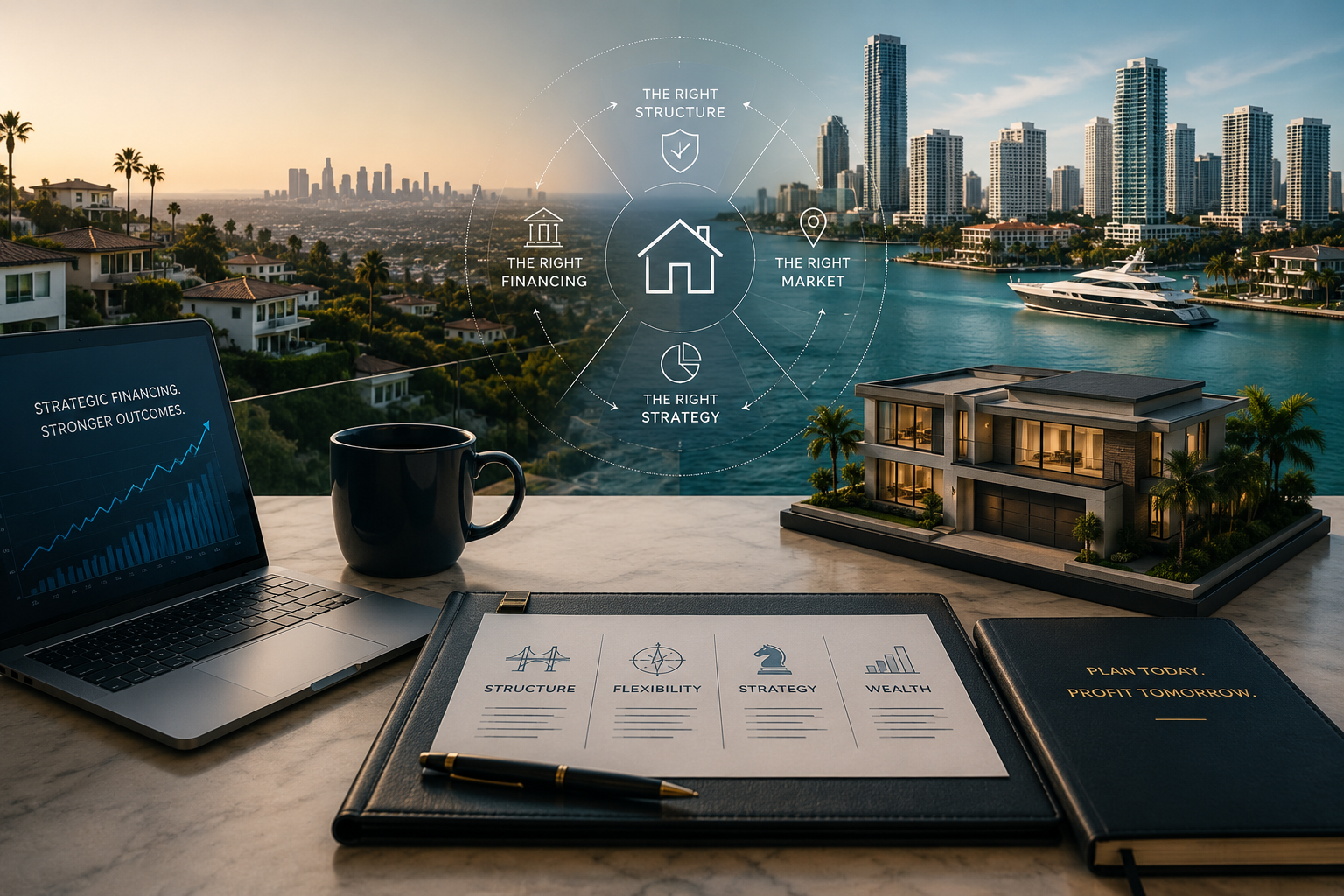
- How should the property be structured?
- What financing options are available?
- What are the tax implications?
- How does FIRPTA impact future resale?
- Should the asset be held personally or through an entity?
- What are the long-term carrying costs?
- What markets offer the strongest long-term positioning?
In many cases, the financing and ownership structure are now just as important as the property itself.
This is especially true among investors purchasing:
- Luxury condominiums
- Waterfront homes
- Branded residences
- Pre-construction opportunities
- Income-producing investment properties
The international buyer of 2026 is analytical, strategic, and globally informed.
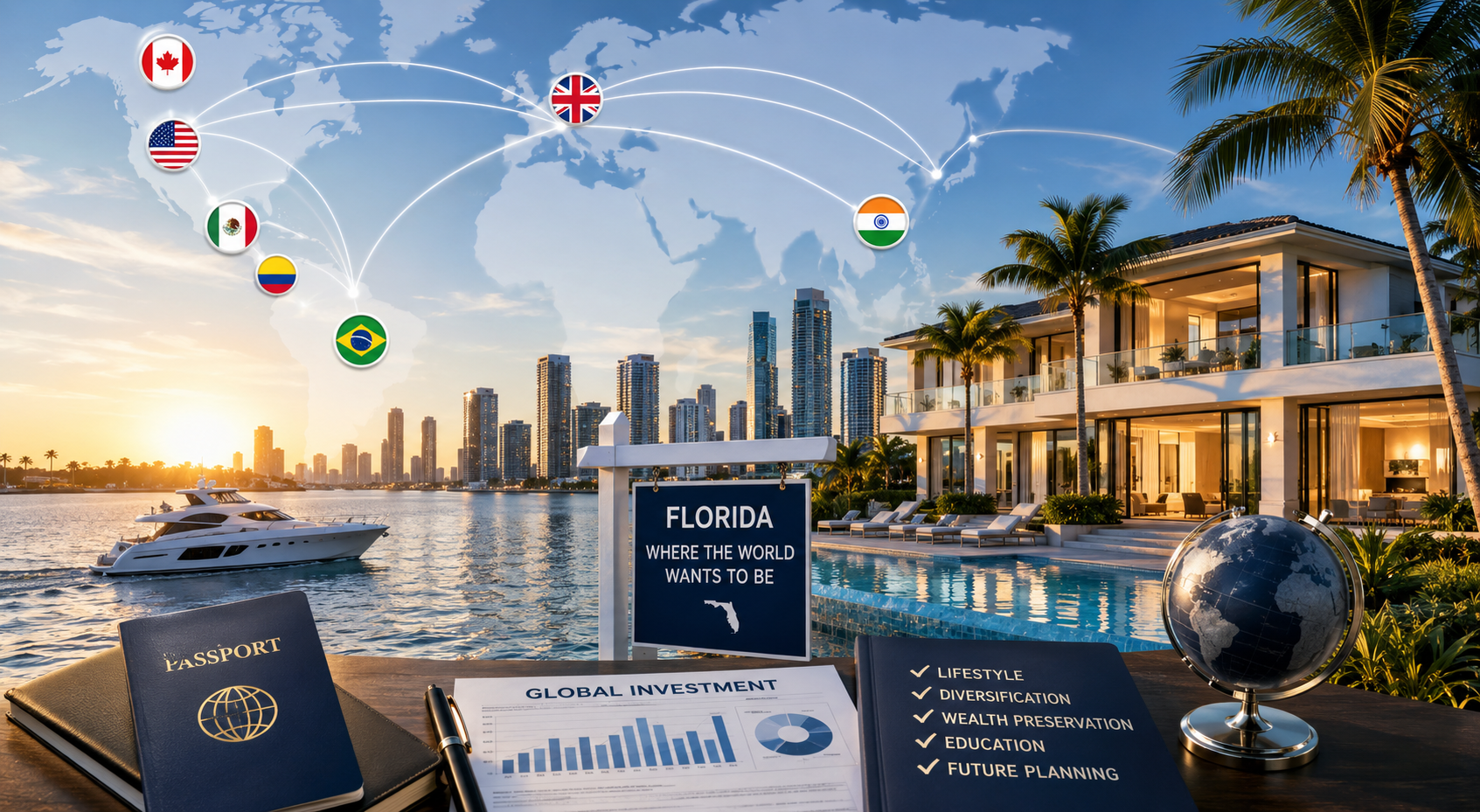
Where International Demand Is Coming From
Florida continues attracting buyers from around the world, but several regions remain especially active.
Latin America & Caribbean
Nearly half of Florida’s international real estate activity continues originating from Latin America and the Caribbean.
Political instability, currency diversification concerns, and wealth preservation strategies continue driving substantial interest in U.S. real estate ownership.
Miami, in particular, remains deeply connected to Latin American capital flows.
Canadian Buyers
Canada continues representing one of Florida’s strongest international buyer segments by dollar volume.
Many Canadian buyers view Florida as:
- A seasonal lifestyle destination
- A retirement strategy
- A long-term family asset
- A stable U.S. dollar investment
South Florida and Florida’s Gulf Coast remain especially attractive to this demographic.
Brazilian Buyers
Brazilian buyers remain one of Florida’s most loyal and consistent international groups.
Many Brazilian families continue prioritizing:
- New construction
- Lifestyle security
- Educational access
- Long-term U.S. investment exposure
In many cases, buyers spend months or years researching markets digitally before making a purchase decision.
Trust and local expertise matter tremendously within this segment.
European & U.K. Buyers
Demand from Europe and the United Kingdom also continues growing, particularly within luxury coastal and second-home markets.
Buyers are increasingly attracted to:
- Florida’s climate
- Luxury lifestyle
- International accessibility
- Tax advantages
- Waterfront living
Many are purchasing with multi-generational planning in mind.
Florida’s Luxury Market Remains Globally Competitive
Another major factor supporting continued demand is Florida’s relative value compared to other global luxury markets.
While prices have appreciated significantly, ultra-high-net-worth buyers still often view Florida as attractive relative to:
- London
- New York
- Los Angeles
- Paris
- Vancouver
- Hong Kong
In addition, South Florida’s luxury market continues benefiting from:
- New luxury developments
- Branded residences
- Waterfront scarcity
- Expanding financial migration
- Continued business relocation
This is particularly evident throughout:
- Miami Beach
- Palm Beach
- Fort Lauderdale
- Naples
- Sunny Isles
- Brickell
- Boca Raton
- Tampa Bay
What This Means for Buyers, Investors, and Agents
The international real estate market in Florida is no longer a niche segment.
It is becoming a structural component of the state’s housing economy.
The professionals who continue succeeding in this environment will be the ones who understand:
- Cross-border financing
- Global wealth trends
- Investment structuring
- Cultural communication
- Tax coordination
- Long-term advisory positioning
Today’s market rewards strategic guidance more than transactional sales tactics.
Relationships, education, and trust are becoming increasingly valuable currencies.
Final Thoughts
Despite market cycles, rising rates, and global uncertainty, international capital continues proving it still wants exposure to Florida real estate.
The difference today is that buyers are becoming more strategic, more informed, and more focused on long-term positioning.
Florida remains one of the most globally connected real estate markets in the world — and for many investors, families, and entrepreneurs, it continues representing far more than just a real estate purchase.
It represents opportunity, stability, lifestyle, and global diversification in a rapidly changing world.